APPEALS COURT UPHOLDS $8 MILLION VERDICT IN SEXUAL ABUSE CASE AGAINST PRESIDENT-ELECT TRUMP
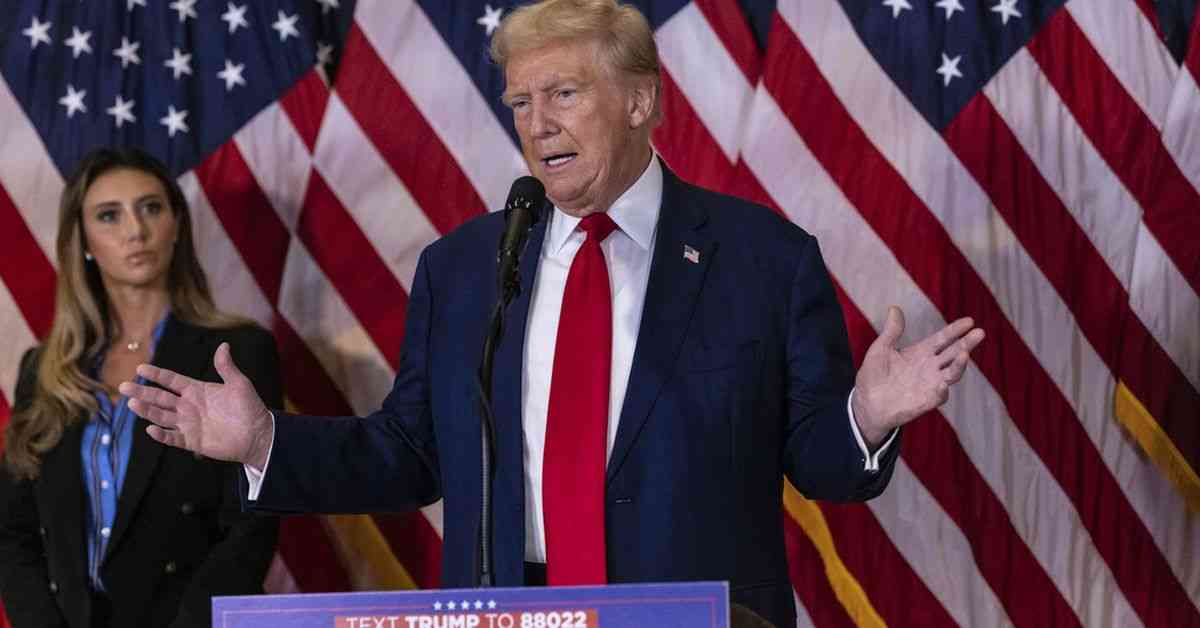
The Second US Circuit Court of Appeals issued a written opinion on Monday upholding the $US5 million ($8 million) award that the Manhattan jury granted to E Jean Carroll for defamation and sexual abuse. The longtime magazine columnist testified at a 2023 trial that Trump turned a friendly encounter in spring 1996 into a violent attack after they playfully entered the store’s dressing room. Trump held a press conference after a hearing in September. Trump skipped the trial after repeatedly denying the attack ever happened. But he briefly testified at a follow-up defamation trial earlier this year that resulted in an $US83.3 million award. The second trial resulted from comments then-President Trump made in 2019 after Carroll first made the accusations publicly in a memoir. In its ruling, a three-judge panel of the appeals court rejected claims by Trump’s lawyers that trial Judge Lewis A Kaplan had made multiple decisions that spoiled the trial, including his decision to allow two other women who had accused Trump of sexually abusing them to testify. The judge also had allowed the jury to view the infamous Access Hollywood tape in which Trump boasted in 2005 about grabbing women’s genitals because when someone is a star, “you can do anything”. “We conclude that Mr Trump has not demonstrated that the district court erred in any of the challenged rulings,” the 2nd Circuit said. “Further, he has not carried his burden to show that any claimed error or combination of claimed errors affected his substantial rights as required to warrant a new trial.” In September, both Carroll, 81, and Trump, 78, attended oral arguments by the Second Circuit.
## Legal Battle Continues
E Jean Carroll’s lawyer said they were gratified by the decision. Steven Cheung, a Trump spokesperson, said in a statement that Trump was elected by voters who delivered “an overwhelming mandate, and they demand an immediate end to the political weaponization of our justice system and a swift dismissal of all of the Witch Hunts, including the Democrat-funded Carroll Hoax, which will continue to be appealed.” Roberta Kaplan, a lawyer who represented Carroll during the trial and is not related to the judge, said in a statement: “Both E Jean Carroll and I are gratified by today’s decision. We thank the Second Circuit for its careful consideration of the parties’ arguments.” The first jury found in May 2023 that Trump sexually abused Carroll and defamed her with comments he made in October 2022. That jury awarded Carroll $US5 million. Donald Trump quietly observed Friday (local time) as his lawyer fought to overturn a verdict finding the former president liable for sexual abuse and defamation. In January, a second jury awarded Carroll an additional $US83.3 million in damages for comments Trump had made about her while he was president, finding that they were defamatory. That jury had been instructed by the judge to accept the first jury’s finding that Trump had sexually abused Carroll. Trump testified for under three minutes at the second trial and was not permitted to challenge conclusions reached by the May 2023 jury. Still, he was animated in the courtroom throughout the two-week trial, and jurors could hear him grumbling about the case.